The European Identity Graph Built for a Post-Cookie World

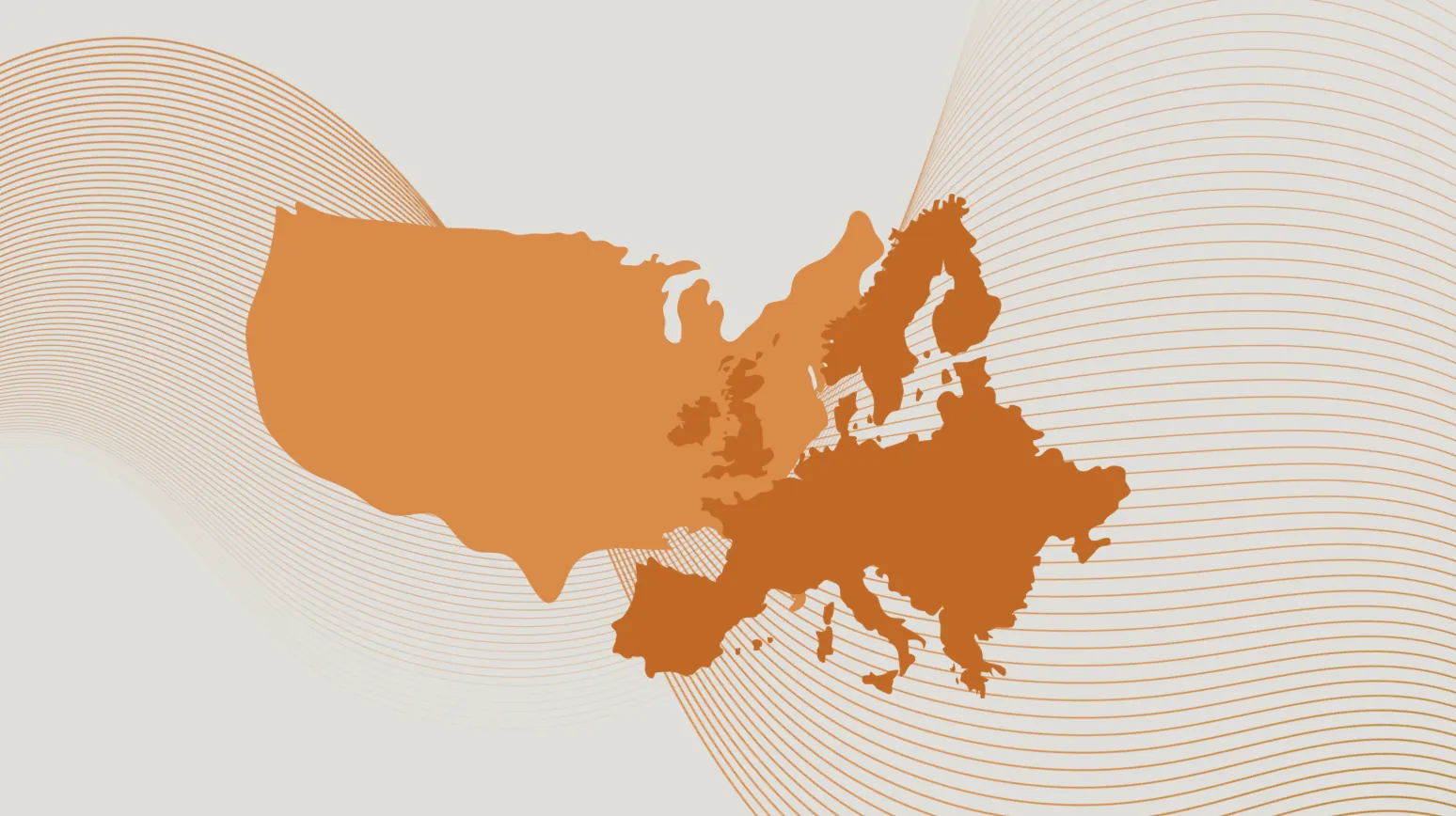
A privacy-compliant, probabilistic identity graph. ROQAD multi-device, ID-agnostic identity graphs make it easy to expand segments across North America and Europe.

Open Performance Possibilities with ROQAD Graph

Connect your baseline IDs to other IDs associated with them. Multi-device and ID-agnostic.

Privacy Compliant

Roll With the Regulations

The ROQAD Graph only uses data that has a TCF consent string attached. All products are GDPR and CCPA compliant, with an eye on US regulatory developments. Controller and processor dynamics are well understood.

Probabilistic

Get More for Your Money

Probabilistic graphs achieve more access and scale than deterministic alone. 99% confidence factor on scale achievement. Many of the deterministic players have become our customers.

Global Access

Include Your EU Audience

The European market is a tricky one to play ball in. ROQAD is the only probabilistic graph on the market throughout the EU. Mastery of this complicated geography trickles down to best-in-class technology in North America and in new markets coming soon.

The Basics

What is an identity graph?

An identity graph is a continuously updated map of which identifiers belong to the same person or household. Cookies, mobile advertising IDs, hashed emails, CTV device IDs and universal IDs are stored as points in the graph, and the links between them record that those signals were seen together, along with how confident the graph is in each connection.

Advertisers use identity graphs because one consumer rarely uses a single device. Someone may read the news on a phone, shop on a laptop and stream on a connected TV, and each of those screens produces a different identifier. Without a graph, those look like three unrelated users. With one, they become a single addressable audience that can be targeted, frequency-capped and measured across every screen.

Identity graphs are the output of identity resolution. For a broader introduction to the process, read our complete guide to identity resolution.
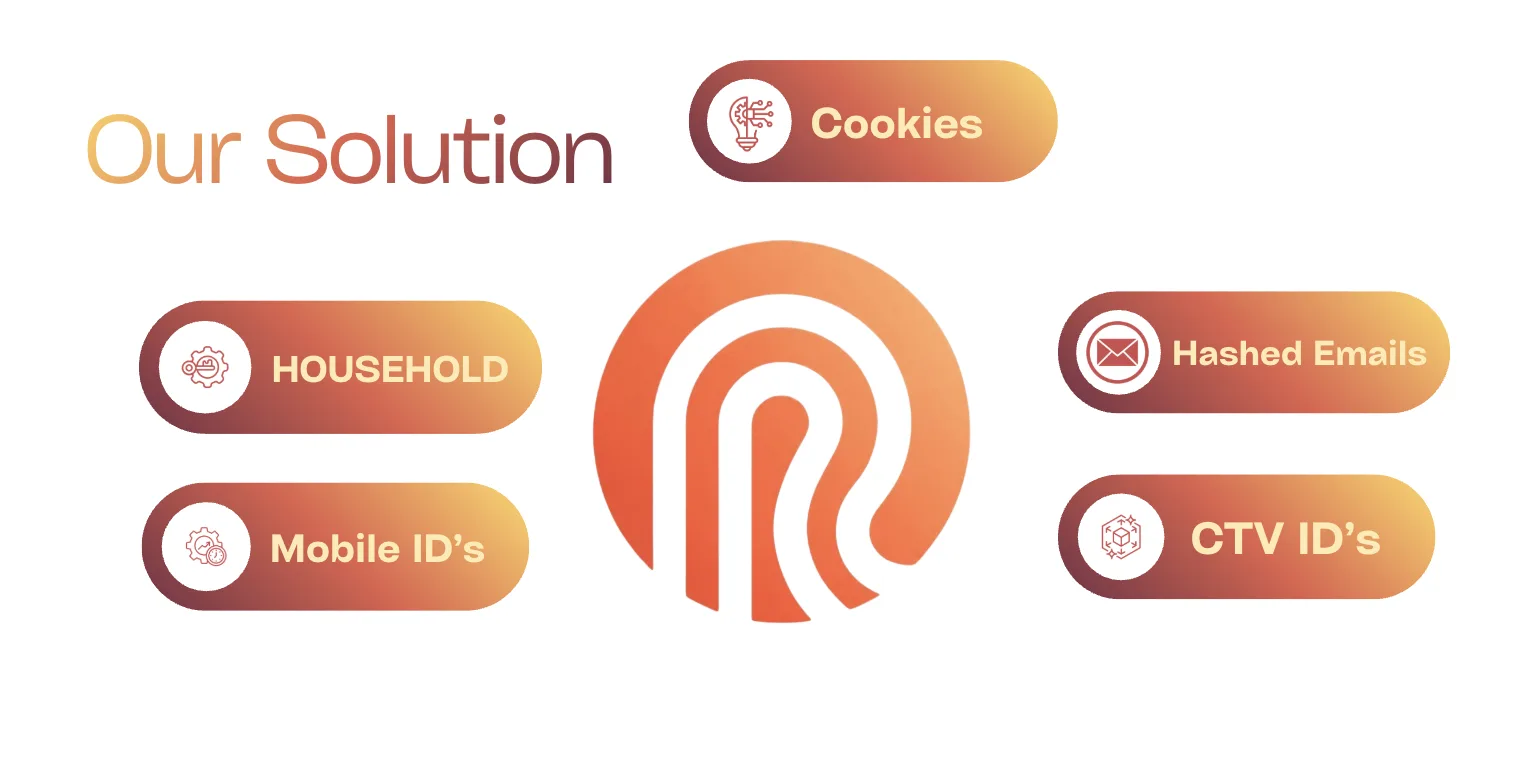
Our solution: cookies, hashed emails, mobile IDs, CTV IDs and household data resolved into one identity.
500M+
Unique European IDs
7B+
Cross-device links
Methods

Deterministic vs probabilistic identity graphs

Deterministic

A deterministic identity graph only links identifiers when there is a directly observed match, typically a hashed email, a login or another authenticated signal. These links carry very high confidence, but they only exist where people sign in, which leaves most open-web sessions unconnected.

Probabilistic

A probabilistic identity graph uses statistical models over signals such as device, network, location and behaviour to infer which identifiers belong together. It reaches far more of the open web, and each modelled link carries a confidence score so that partners can choose the precision they need.

The ROQAD identity graph combines both. Deterministic anchors, such as hashed emails and authenticated IDs supplied by partners, ground the graph in observed connections. Probabilistic modelling then extends those anchors to the devices and identifiers that never log in. The result is the deterministic precision described on our home page, with the scale that probabilistic links add. Probabilistic graphs achieve more access and scale than deterministic alone, which is why many deterministic players have become ROQAD customers.

How It Works

How the ROQAD identity graph works

1. Consented input

The ROQAD Graph only uses data that has a TCF consent string attached.

2. Signal collection

Device IDs, hashed emails, CTV IDs and cookies enter the graph from our position within the programmatic ecosystem and from partner data.

3. Linking

Deterministic matches and probabilistic models connect the signals that belong to the same person and the same household.

4. Output

Your baseline IDs are returned connected to the other IDs associated with them, multi-device and ID-agnostic, as one stable audience you can target and measure.

Because the graph is ID-agnostic, it works with whichever identifiers your platform already uses, rather than forcing a single ID standard.

Applications

Identity graph use cases

DSP activation

Extend first-party and partner segments to the connected devices of the same people, then activate them in the DSPs you already buy through, including Amazon DSP and The Trade Desk, with less wasted reach and better frequency control.

Connected TV

Link CTV device IDs to the mobile and web identifiers in the same home, so CTV campaigns can be planned, capped and measured alongside the rest of your digital media. See CTV Connect.

Household targeting

Group devices into households to reach every relevant screen in a home, or to suppress households that have already converted. Learn more about the ROQAD Household Graph.

Measurement and attribution

Connect exposures on one device to outcomes on another. Wavemaker used ROQAD insights to boost offline visitation by 17.7% and drive down cost per conversion by 52% for a major home improvement retailer.

How It Works

From Devices and Identifiers to People and Households

Device IDs, hashed emails, CTV IDs and cookies enter the ROQAD Identity Graph, which links the signals that belong to the same person, and the same household, and returns them as one stable audience you can target and measure.

A hand holding a miniature house with ROQAD's orange identity waves sweeping behind it.
"

ROQAD insights enabled us to analyse all digital media channels for our client, a major home improvement retailer, in terms of offline performance. By applying the gathered insights, we were able to boost offline visitation by 17.7% and drive down cost per conversion by 52%.

Patrycja Dyrda, Marketing Specialist, Wavemaker (WPP)

Carbon Negative or Bust

2,164 Trees Planted Over Our First 18 Months

Climate change is a very real and pressing issue. We are aware that our machine learning models are energy-intensive, and we have invested in a program to remove more carbon from the environment than we emit. Over the first 18 months of that program we planted 2,164 trees; the figure covers that period and is not a live running total.

Person planting a young tree in soil

Future-Proof Your Identity Resolution

DSPs, CDPs, brands, agencies and other organisations across the adtech landscape are improving digital marketing efficiency with ROQAD identity infrastructure.

Cover image for the case study: Annalect and Flashtalking Increase Media Campaign Performance for McDonald's
Case Study

Annalect and Flashtalking Increase Media Campaign Performance for McDonald's

Our Identity Graph helped Annalect and Flashtalking connect the target audience to McDonald's app users.

Read the McDonald's identity graph case study
Cover image for the case study: Global Affiliate Marketing Network Solves Sales Recovery Conundrum
Case Study

Global Affiliate Marketing Network Solves Sales Recovery Conundrum

ROQAD's identity graph enabled the recovery of sales worth 3x the contract value within 1 year.

View the affiliate marketing network sales recovery results
FAQ

Frequently asked questions

What is an identity graph?

+

An identity graph is a continuously updated map of which identifiers, such as cookies, mobile ad IDs, hashed emails and CTV device IDs, belong to the same person or household, with a confidence level for each link.

What is the difference between a deterministic and a probabilistic identity graph?

+

A deterministic identity graph links identifiers only through directly observed matches such as logins or hashed emails. A probabilistic identity graph uses statistical models to infer links, which reaches far more of the open web. ROQAD combines both.

How large is the ROQAD identity graph in Europe?

+

ROQAD operates one of Europe's largest independent identity graphs, with 500M+ unique European IDs and 7B+ cross-device links across the open web, Meta, CTV, Amazon DSP and The Trade Desk.

Is the ROQAD identity graph GDPR compliant?

+

Yes. The ROQAD Graph only uses data that has a TCF consent string attached, and all products are GDPR and CCPA compliant.

Which identifiers does the ROQAD identity graph work with?

+

The graph is multi-device and ID-agnostic. It connects device IDs, hashed emails, CTV IDs and cookies, so you can start from whichever baseline IDs you already use.

Where can I activate audiences built on the identity graph?

+

ROQAD audiences can be activated across the open web, Meta, CTV, Amazon DSP and The Trade Desk, and the graph also powers household targeting and cross-device measurement.

Your Identity Partner Should Understand Your Business and the Entire ID Landscape

Realise better programmatic performance when you have a partner that fully supports your global, privacy-compliant requirements.